Publications Routes/Road Road assets management
This page lists Routes/Roads articles of PIARC in the field of road assets management. These publications are classified chronologically.
-
Use of geosynthetics for more resilient infrastructure
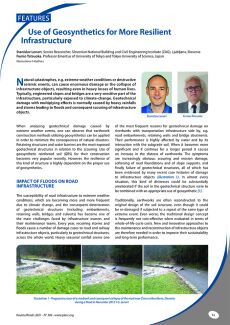
Natural catastrophes, e.g. extreme weather conditions or destructive seismic events, can cause enormous damage or the collapse of infrastructure objects, resulting even in heavy losses of human lives. Typically, engineered slopes and bridges are a very sensitive part of the infrastructure, particularly exposed to climate-change. Geotechnical damage with multiplying effects is normally caused by heavy rainfalls and storms leading to floods and consequent scouring of infrastructure objects.
-
Improving resilience of road networks – Case studies
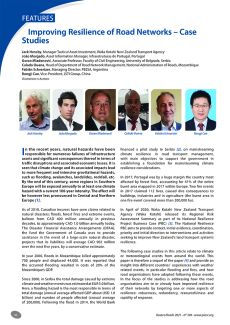
In the recent years, natural hazards have been responsible for numerous failures of infrastructure assets and significant consequences thereof in terms of traffic disruptions and associated economic losses. It is seen that climate change and its associated impacts lead to more frequent and intensive gravitational hazards, such as flooding, avalanches, landslides, rockfall, etc. By the end of this century, some regions in Southern Europe will be exposed annually to at least one climate hazard with [...]
-
Improving resilience of road networks - Framework
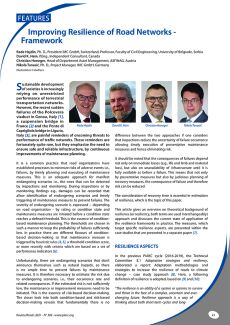
Sustainable development of societies is increasingly relying on unrestricted performance of terrestrial transportation networks. However, the recent sudden failures of the Polcevera viaduct in Genoa, Italy, a suspension bridge in France and the Ponte di Caprigliola bridge in Liguria, Italy, are painful reminders of oncoming threats to performance of traffic networks. These reminders are fortunately quite rare, but they emphasize the need to ensure safe and reliable infrastructure, by continuous [...]
-
Resilience and Asset Management
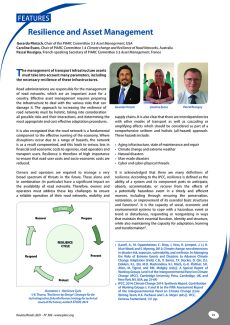
The management of transport infrastructure assets must take into account many parameters, including the necessary resilience of these infrastructures.
-
Approaches to Resilience: Examples from the United States of America
Transportation owners and operators are responsible for the delivery of a range of services and functions through the management of a multifaceted system of assets. These systems must be managed notwithstanding external threats, aging and deteriorating infrastructure, and fiscally constrained sustainable resources. Agencies are also moving towards performance-based planning and resource allocation while simultaneously recognizing risks that may undermine their strategic goals. With the passage of [...]