Publications Routes/Roads Environment
This page lists Routes/Roads articles of PIARC in the field of environment. These publications are classified chronologically.
-
Weathering the Storm: Adapting Victoria’s Infrastructure to Climate Change - PIARC Prize - Adaptation to Climate Change
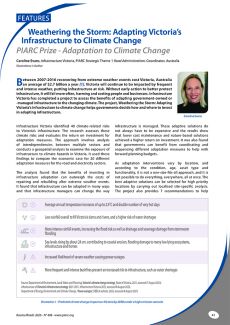
Between 2007-2016 recovering from extreme weather events cost Victoria, Australia an average of $2.7 billion a year [1]. Victoria will continue to be impacted by frequent and intense weather, putting infrastructure at risk. Without early action to better protect infrastructure, it will fail more often, harming and costing people and businesses. Infrastructure Victoria has completed a project to assess the benefits of adapting government-owned or -managed infrastructure to the changing climate. The [...]
-
Asset Management in the Context of Climate Change - Approach of the Bavarian Road Administration
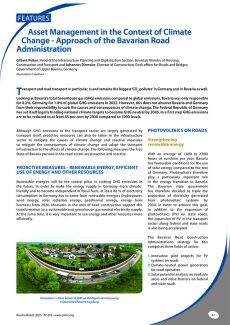
Transport and road transport in particular, is and remains the biggest ‘CO2 polluter’ in Germany and in Bavaria as well. Looking at Bavaria’s total Greenhouse gas (GHG) emissions compared to global emissions, Bavaria was only responsible for 0.2%, Germany for 1.8% of global GHG emissions in 2022. However, this does not absolve Bavaria and Germany from their responsibility to curb the causes and consequences of climate change. The Federal Republic of Germany has set itself legally binding national [...]
-
A Comparison of Rail and Road Transport as a Strategy to Reduce GHGs in Mexico
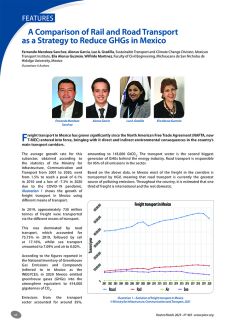
Freight transport in Mexico has grown significantly since the North American Free Trade Agreement (NAFTA, now T-MEC) entered into force, bringing with it direct and indirect environmental consequences in the country’s main transport corridors.
-
The Electric Road: Technical, Economic and Environmental Study Carried Out in France
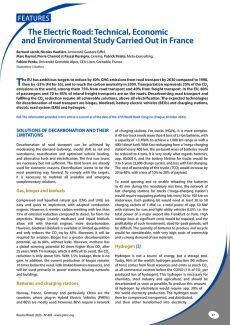
The EU has ambitious targets to reduce by 40% GHG emissions from road transport by 2030 compared to 1990, then by -55% (Fit for 55), and to reach the carbon neutrality in 2050. Transportation represents 25% of the CO2 emissions in the world, among them 75% from road transport and 40% from freight transport. In the EU, 80% of passengers and 70 to 85% of inland freight transports are on the roads. Decarbonising road transport and fulfiling the CO2 reduction require all achievable solutions, above [...]
-
A Digital Tool to Support Decision Makings and to Reduce Carbon Footprint of Road Networks
Roads are a material-intensive system with an ever-increasing material demand as evidenced by 700,000 km of new roads built around the world every year. Moreover, its particularly long service life of several decades implies maintenance needs with additional materials and energy consumption to secure vehicle safety and transport comfort. Meanwhile, climate actions and sustainable strategy in the infrastructure sector are of crucial importance to reduce material resource, energy consumption and associated [...]
1 / 67
- Previous
- Next